

After arriving in Australia by ship from Scotland we disembarked and were transported by coach to a migrants hostel in Sydney’s eastern suburb of Matraville, it was March 1952 and with more and more migrants arriving daily the hostel soon became overcrowded, uncomfortable and eventually hostile with officialdom. With our living quarters nothing more than a square room with a partition separating the bedroom from the sitting room, we were forced to live in what my mom declared intolerable conditions. The community bathroom and toilets we shared with dozens of other families were in a separate block and rarely cleaned. We lined up daily with hundreds of other families for food ladled from pots the size of garbage bins. This was a far cry from what we had been promised on the other side of the world.
One morning, when my dad was at work as a boilermaker in an iron works, I heard my mom arguing with a man at the door. ’I’m telling you and I’m telling you for the last time,’ he shouted at her, ‘do any more cooking in your room and I’ll have you evicted.’ Mom, a tiny wisp of a woman, stood ten feet tall in my eyes and gave it right back. ‘You can’t do that,’ she shouted just as loud, ‘you can’t tell me I can’t cook some decent food for my son. Nobody can eat the slop you people serve to us in that mess hall you call a canteen.’
She had taken to cooking our own food on a small electric frying pan in our sitting room. ’And I don’t believe,’ she persisted over his rant, ‘you can have me thrown out for feeding my son,’ her parting words as she slammed the door in his face.
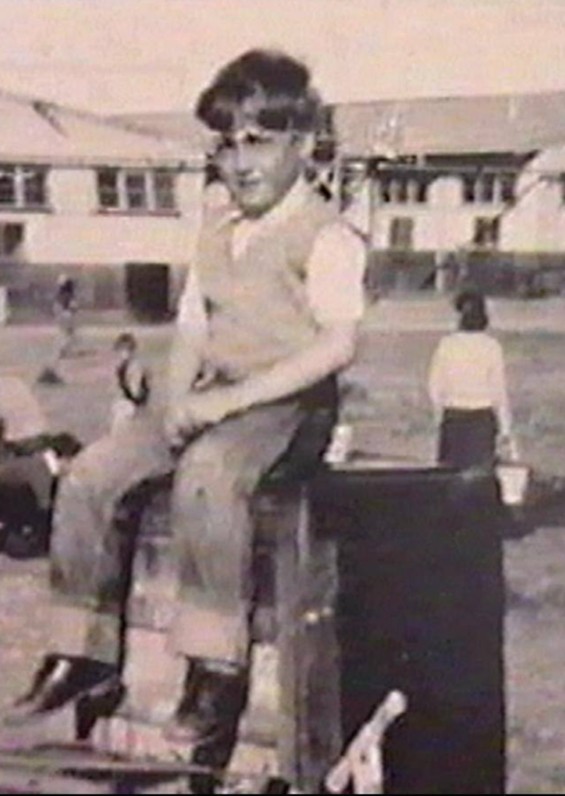
The next day I found myself sitting on a travel chest and a pile of battered suitcases. Our family belongings, in the middle of a grass paddock in front of the hostel.
‘Don’t you worry son,’ my mom said in her broad Scottish accent, ‘your daddy will be back with somewhere for us to live.’
The truth was, I wasn’t actually all that worried about it. I was a kid; it was just another part of the adventure. I watched my mom gazing back at the long barrack style buildings. Row after row of grey structures made of fibro, pure asbestos. ‘And it’ll be somewhere a lot better than this,’ she vowed. ‘A couple of nights under the stars won’t be so bad,’ I thought, ‘at least it doesn’t snow here.’
A few days later I was sitting on a rock in the middle of rugged bushland near La Perouse, my dad was showing my mom a wooden crate about the size of a shipping container, the initials, GMH, stamped on the side of it. A few plywood caravans and containers belonging to other migrants who had faced similar plights were scattered nearby. My mum and I looked over the crate with interest, mom with her usual optimism, ‘What’s GMH?’ She asked. ‘General Motors Holden,’ my dad answered proudly.
He couldn’t own a car but at least he had the box one came in. No doubt sensing she was warming to the idea, ‘It’s what they transport the cars in,’ he told her. Using holes in the side of the crate for footings, I climbed on top of it and my mom, looking at the holes, simply nodded, thinking of the cold winds that would sweep through them. ‘I know it doesn’t look much right now,’ dad said, ‘I’ll put a tarpaulin over it to keep out the weather and we’ll fix it up with our things,’ he added, sensing her enthusiasm beginning to wane. ‘It’ll be fine,’ mum said, ‘at least we’re free to take care of ourselves.’